
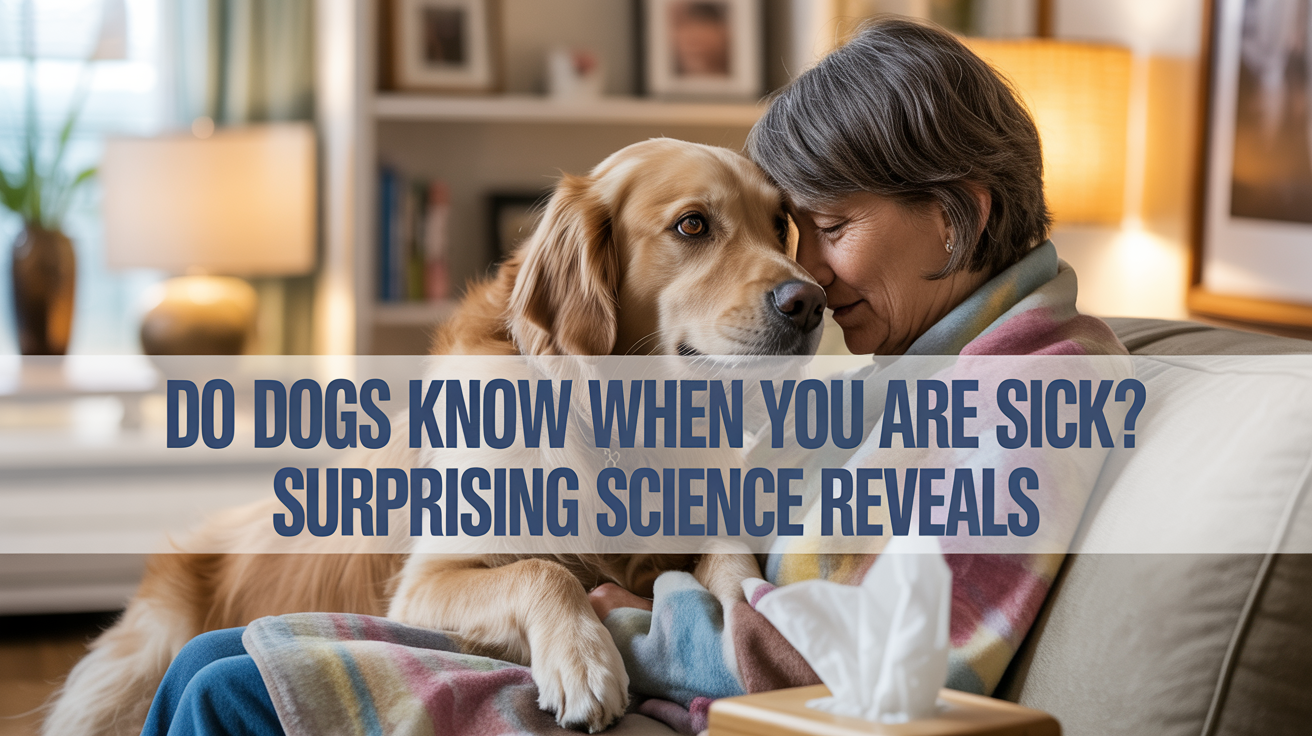
Your dog keeps staring at you. She won’t leave your side. You’re feeling under the weather, and you wonder, does she actually know you’re sick?
Yes, she does. This article shows you the science behind your dog’s sixth sense. You’ll learn how dogs detect illness, what signs they show, and why they act differently around sick people. We’ll walk through the research that proves dogs can smell disease and sense changes in your body.
I’ve studied animal behavior for years, and I’m here to give you straight answers you can trust. No fluff. No guesswork. Just solid science explained in plain English. By the end, you’ll understand exactly what your dog knows about your health and how she shows it. You’ll finally have the real answer to that nagging question.
Do Dogs Really Know When You Are Sick?

Your dog suddenly won’t leave your side. She follows you from room to room. She rests her head on your lap. Is she just being clingy? Maybe not.
Scientists have found something interesting. Dogs can actually smell changes in your body. When you’re sick, your body releases different chemicals. Your dog’s nose picks up on these tiny changes. Research shows dogs detect more than just physical illness. They notice when your emotions shift, too. Your dog has about 300 million scent receptors. You have only 6 million.
I’ve heard countless stories from dog owners. Their dogs refused to leave their side before they got sick. Some kept sniffing one specific body part. Others became unusually gentle and protective. You might think a coincidence. But these patterns happen too often to ignore. Your dog watches you constantly. She knows your normal routine, your usual smell, your typical behavior. When something changes? She notices.
How Do Dogs Know When You Are Sick?
Your dog doesn’t need a medical degree. She has built-in tools that work better than most technology. Let me show you how she does it.
Their Extraordinary Sense of Smell

Think about your dog’s nose for a moment. It’s a powerful detection machine. She has up to 300 million scent receptors. You only have 6 million. That’s not a small difference. That’s a massive advantage.
Your body changes when you’re sick. Your hormones shift. Inflammation releases specific chemicals. Infections create unique scent markers. Your dog smells all of it. She can detect diseases like cancer, diabetes, and even upcoming seizures. Some dogs are trained for this work. But many pet dogs notice these changes naturally.
Detecting Changes in Body Language and Routine

You move differently when you’re sick. Your dog watches everything you do. She knows your normal patterns better than you think. Your posture slumps. You move more slowly. Your facial expressions change. Your energy drops noticeably.
Your sleep schedule shifts when illness hits. You stay in bed longer. You nap at odd times. Your dog notices. She’s been observing you for years. Every single day. When something’s off? She knows immediately. You can’t hide it from her.
Sensing Emotional and Behavioral Shifts

Stress affects your body chemistry. When you’re sick, your cortisol levels rise. Your dog can smell this stress hormone in your sweat and breath. She picks up on these chemical changes before you even realize you’re stressed.
Your emotional state changes when you’re unwell. You might feel anxious, irritable, or withdrawn. Dogs are experts at reading emotions. They’ve lived alongside humans for thousands of years. Your dog senses when you’re upset, scared, or in pain. She responds to these shifts with concern and protectiveness.
Signs Your Dog Knows You’re Sick
Your dog’s behavior changes when you’re unwell. These shifts are subtle sometimes. Other times? They’re impossible to miss. Here’s what to watch for.
Increased Clinginess or Protective Behavior

Your dog becomes your shadow. She follows you to the bathroom. She sits pressed against your legs. She won’t let you out of her sight. This isn’t random. It’s her way of watching over you.
Some dogs take it further. They position themselves between you and strangers. They alert when someone approaches. They’re guarding you. Your dog senses your vulnerability. Her protective instincts kick in naturally.
Reduced Playfulness or Quiet Observing

Your playful pup suddenly ignores her favorite toy. She doesn’t beg for walks. She just watches you quietly. This behavior shift tells you something important.
Dogs match your energy level. When you’re sick and low on energy, she lowers hers too. She might sit across the room, just observing. Her eyes follow your every move. She’s monitoring you without being intrusive.
Persistent Sniffing or Nudging Specific Body Areas\

Watch where your dog focuses her attention. She might sniff your breath repeatedly. She might nose at your stomach or chest. She focuses on one specific spot. She licks a particular area over and over. She paws gently at the same body part.
This targeted behavior means something. She’s detected a change in that exact location. Dogs have identified tumors, infections, and injuries this way. Don’t ignore persistent sniffing of one area. It’s worth checking with your doctor.
Sleeping Closer Than Usual or Refusing to Leave Your Side
Your dog normally sleeps in her own bed. Now she’s curled up right next to you. She’s chosen to be near you. Even when you move to another room, she follows and settles close by.
This closeness serves multiple purposes. She’s keeping watch over you. She’s offering comfort through her presence. She’s staying alert in case you need help. Some dogs won’t even eat unless you’re nearby when they sense you’re sick.
Alerting or Pacing If They Sense a Serious Condition

Some dogs show urgent behavior. They pace back and forth. They whine or bark insistently. They’re trying to tell you something critical. This alerting behavior often happens before seizures, diabetic episodes, or heart problems.
Your dog might paw at you repeatedly. She might refuse to calm down until you take action. Trained medical alert dogs do this on purpose. But regular pets sometimes show these warning signs naturally. Trust your dog’s instincts. If she’s acting unusually urgent? Get medical help.
Why Dogs Try to Comfort You?
Your dog doesn’t comfort you by accident. She’s driven by deep instincts and genuine connection. Let me explain why she stays close when you’re hurting.
- Pack Instinct: Dogs evolved as pack animals. They survive by caring for their group members. When you’re sick or weak, your dog sees you as part of her pack. She protects vulnerable members. It’s hardwired into her DNA to stay close and offer support.
- Emotional Empathy: Your dog actually feels what you feel. Studies show that dogs experience emotional contagion. When you’re sad, stressed, or in pain, she picks up on those emotions. Her brain responds to your distress. She genuinely wants to help you feel better.
- Loyalty and Learning: Your dog has learned that staying close makes you happy. You’ve rewarded her presence with affection over the years. She’s motivated by love and habit. She knows her company comforts you. So when you’re sick? She doubles down on what she knows works.
What Science Still Doesn’t Know?
We’ve learned a lot about dogs and illness detection. But huge gaps remain. Scientists are still figuring out how this ability really works.
- Research Limitations: Most studies use small sample sizes. They focus on trained detection dogs, not regular pets. We don’t fully understand how untrained dogs sense illness naturally. The mechanisms behind their detection remain partly mysterious. More funding and attention are needed in this field.
- Breed Differences: Does a Bloodhound detect illness better than a Chihuahua? We don’t know for sure. Some breeds have stronger noses. Others bond differently with humans. Your dog’s personality matters too. Is she naturally attentive or independent? These factors haven’t been studied enough.
- Larger Studies Needed: Current research shows promise but lacks scale. We need controlled experiments with hundreds of dogs. We need to test different conditions, breeds, and illness types. Until then? Much of what we know comes from individual stories and small trials. The science is real but incomplete.
Conclusion
So do dogs know when you are sick? The answer is clear. Your dog can smell changes in your body chemistry, pick up on your behavior, and sense when something’s off. This isn’t magic, it’s biology. Dogs have the tools to detect illness, and they use them.
Now you understand why your dog acts differently when you’re not feeling well. That extra attention isn’t random. It’s your dog’s way of responding to real changes she can detect. You can trust what you’ve been noticing all along.
Pay attention to how your dog behaves around you. She might be telling you something important about your health. Have you noticed your dog acting strange before you got sick? Drop a comment below and share your story. Other dog owners would love to hear it.
Frequently Asked Questions
Can dogs really sense when you’re sick?
Yes, dogs can sense when you’re sick. They detect changes in your scent, body language, and routine. Research shows dogs have up to 300 million scent receptors compared to our 6 million. This lets them smell chemical changes in your body when you’re ill.
How do dogs know when you are sick?
Dogs know when you are sick through smell, observation, and instinct. They detect hormonal changes and chemicals your body releases during illness. They also notice when you move differently, sleep more, or act unlike yourself. Their sharp senses pick up what we can’t.
What signs show my dog knows I’m sick?
Your dog may follow you constantly, rest their head on you, or refuse to leave your side. Some dogs become extra gentle or protective. Others may paw at you, whine, or stare intently. These behaviors show your dog senses something’s wrong.
Can dogs smell cancer and other diseases?
Yes, dogs can smell cancer, diabetes, and seizures before they happen. Studies prove that trained dogs detect lung, breast, and ovarian cancer with high accuracy. They smell volatile organic compounds that diseased cells release. Some dogs naturally alert their owners without training.
Do all dog breeds sense illness equally well?
All dogs have strong scent abilities, but some breeds excel more. Bloodhounds, German Shepherds, and Labrador Retrievers have exceptional noses. However, any dog can detect illness in their owner. The bond you share matters more than breed when it comes to noticing you’re sick.