
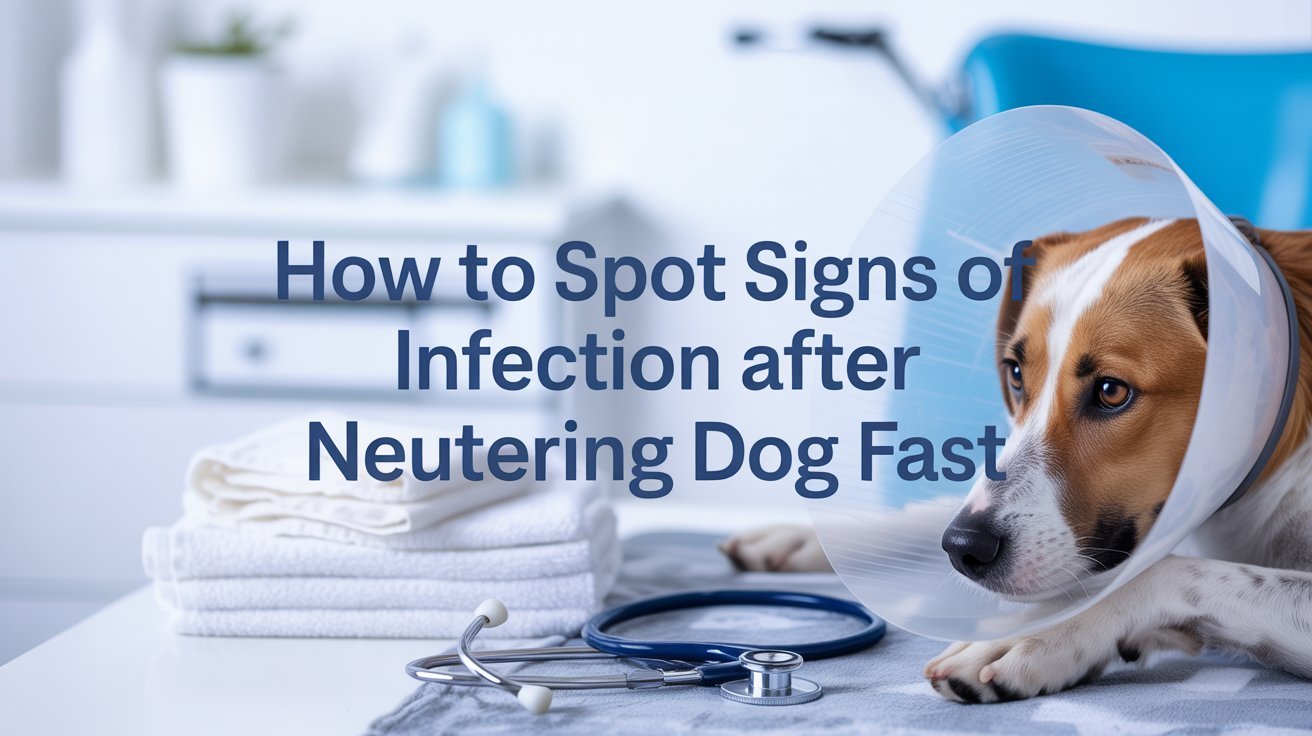
Your dog just had surgery, and you want to make sure they heal properly. Neutering is one of the most common procedures vets perform every day. Most dogs recover quickly without any problems.
However, infections can happen, and knowing what to look for makes all the difference. Catching signs of infection after neutering a dog early helps your pet get treatment fast.
In this guide, you’ll learn the warning signs to watch for, how to care for your dog after surgery, and when you need to call your vet right away.
Key Signs of Infection After Neutering Your Dog
Knowing the signs of infection after neutering a dog helps you act quickly if something goes wrong. Let’s look at seven important warning signs.
1. Excessive Licking or Biting at the Incision Site

Dogs naturally want to lick their wounds, but too much attention to the incision area often means trouble. If your dog constantly tries to reach the wound, infection might be making it itch or hurt more than normal.
Infected wounds create discomfort that makes dogs want to lick and bite at them. This creates a bad cycle because licking brings more bacteria to the area.
2. Unusual Discharge from the Wound

A small amount of clear or slightly pink fluid in the first day or two is normal. But thick, cloudy, yellow, green, or brown discharge signals a problem.
Pay attention to how much discharge you see and what it looks like. If the discharge has a bad smell, these are red flags.
3. Persistent or Heavy Bleeding

Some spots of blood on the first day after surgery are expected. But bleeding that soaks through bandages or continues past the first 24 hours needs attention.
If you see blood pooling around the incision or the area looks like it’s opening up, the wound may have torn and require immediate care.
4. Significant Swelling Around the Incision

Mild puffiness right around the cut is normal for the first few days. But swelling that gets bigger instead of smaller or feels hard and hot points to infection.
If the swollen area grows larger than a grape or seems to be getting worse after day three, call your vet.
5. Intense Redness or Heat at the Site

The skin around a fresh incision will look pink or light red at first. But deep red or spreading redness means infection could be setting in.
Touch the area gently with the back of your hand. If it feels noticeably warmer than the skin around it, that heat indicates infection.
6. Severe Pain or Discomfort

Your dog will be sore for a few days, but extreme pain isn’t normal. Signs include crying when you touch the area, shaking, hiding, or refusing to move.
Normal post-surgery discomfort gets better with each passing day. If your dog seems more uncomfortable on day three than on day one, something’s wrong.
7. Fever and Lethargy

A dog’s normal temperature ranges from 101 to 102.5 degrees Fahrenheit. Anything above 103 degrees indicates fever.
Low energy is expected right after surgery, but your dog should perk up gradually. If they’re still very tired or won’t eat past day three or four, the infection could be draining their energy.
Understanding the Normal Healing Timeline

Knowing what to expect helps you spot signs of infection after neutering a dog more easily.
Days 1 to 3: Initial Recovery Phase
Your dog will be groggy and quiet during this time. The incision area will look pink and slightly puffy. Some dogs don’t want to eat much on the first day.
Mild discomfort during movement is expected. Your dog may walk slowly or carefully.
Days 4 to 10: Intermediate Healing Stage
The incision should start forming a scab or thin layer of healed skin. Itching often happens now as the wound heals. The redness should be fading.
Watch your dog closely during this period since they’ll feel better and want to run or play. Keep activity limited even if they seem energetic.
Days 10 to 14: Complete Healing
Most vets remove stitches between days 10 and 14 if dissolvable stitches weren’t used. The incision should look like a thin pink or white line by now.
You can start increasing activity levels gradually after your vet approves. Most dogs can return to regular exercise after two weeks.
How to Monitor Your Dog’s Incision After Surgery?

Regular checking helps you catch any signs of infection after neutering a dog before they become serious.
Look at the incision area twice a day in good lighting. Check for discharge, redness, swelling, bleeding, or anything that looks different. Gently touch around the area to feel for heat.
Keep a simple log on your phone or paper. Write down what you see each day. This helps you track whether things are getting better or worse.
Taking photos each day can be really useful. Photos let you compare how the area looks over time. If you need vet care, you can show them how the area has changed.
When to Contact Your Veterinarian Immediately?

Some symptoms need urgent attention. Don’t wait to see if they get better on their own.
If your dog vomits more than twice or has diarrhea lasting over 24 hours, call immediately. These symptoms might mean an infection has spread.
Watch for the wound opening up or coming apart. If you see the edges separating or can see tissue under the skin, this is an emergency.
A bad smell coming from the incision site almost always means infection. If you notice a foul or rotten odor, your dog needs antibiotics.
Other Post-Neutering Complications to Be Aware Of

While infections are the most common issue, other problems can occur.
Some dogs have reactions to anesthesia that show up as continued vomiting, trouble breathing, or extreme lethargy. Internal bleeding is rare but serious, showing as pale gums or a swollen belly.
Male dogs sometimes get scrotal swelling where the testicles have been removed. However, if the swelling is huge, hard, hot, or comes with other signs of infection after neutering a dog, get it checked.
These complications look different from typical infections. Infections cause redness, discharge, and warmth in the skin.
Prevention Tips to Reduce Infection Risk
Following proper aftercare steps greatly reduces the chance of infection.
- Use a crate or a small room to restrict movement
- Keep your dog away from stairs if possible
- No rough play with other pets or children
- Short, slow walks for bathroom breaks only
- Make sure the cone fits properly
- Keep the cone on at all times, even when sleeping
- Try inflatable collars if your dog hates the cone
- Avoid rain and puddles during bathroom breaks
- If the area gets wet, gently pat it dry with clean gauze
- Set phone reminders for medication times
- Complete the full course of antibiotics
- Call your vet if your dog vomits medication
Take these steps seriously for the first two weeks, and you’ll greatly improve your dog’s chances of healing without problems.
Conclusion
Being alert to signs of infection after neutering a dog protects your pet’s health during recovery. The seven main warning signs are excessive licking, unusual discharge, heavy bleeding, major swelling, intense redness or heat, severe pain, and fever with lethargy.
The good news is that most dogs heal perfectly after neutering. Following your vet’s aftercare instructions, checking the incision daily, and keeping your dog calm greatly reduces infection risk.
Trust your instincts as a pet owner. You know your dog better than anyone. If something seems off, calling your vet is always the right choice. Early detection means your dog will be back to their happy, healthy self in no time.
Frequently Asked Questions
How Long Should My Dog Wear a Cone After Neutering?
Most dogs need to wear the cone for 10 to 14 days until the incision fully heals or stitches come out. Keep it on at all times to prevent licking. Your vet will tell you when it’s safe to remove.
Can I Take My Dog for Short Walks After Neutering Surgery?
Yes, short, slow leash walks for bathroom breaks only are fine. Keep walks under 10 minutes for the first week. Avoid pulling, running, or excitement. Gradually increase walk length after day seven.
What Should I Do If My Dog Removes Their Stitches?
Contact your vet immediately. Don’t try to fix it yourself. Keep your dog calm and prevent licking the area until you can get professional help. The vet may need to replace stitches depending on the healing progress.
Is It Normal for My Dog to Have a Small Lump at the Incision Site?
A small, firm lump under the skin is often normal and comes from internal stitches or scar tissue forming. It should shrink over the weeks. If it grows, feels hot, or has discharge, call your vet.
When Can My Dog Return to Normal Exercise After Being Neutered?
Most dogs can resume full activity after 14 days with vet approval. Start slowly, adding five minutes of play each day. Watch for any limping or discomfort. Large dogs may need three weeks before rough play.