
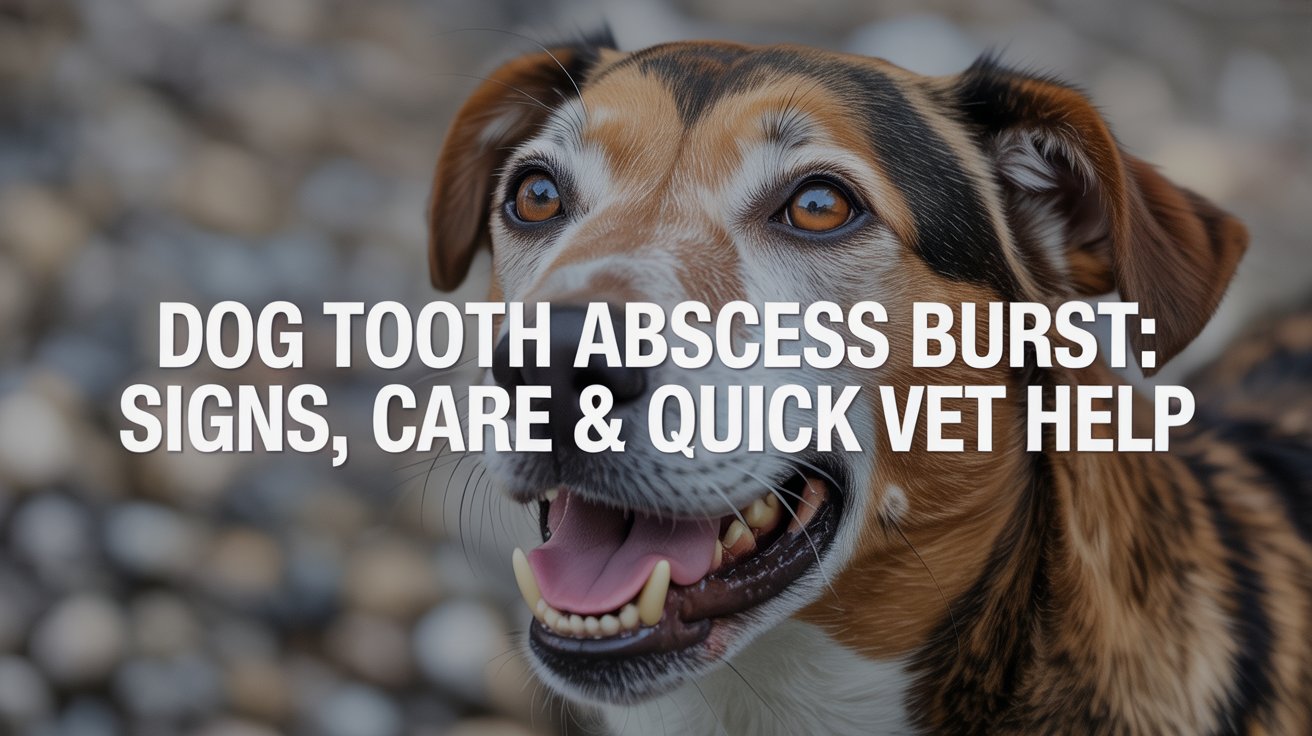
You notice something strange on your dog’s face. There’s a wet spot below the eye, and it smells bad. Your dog seems uncomfortable and won’t eat like normal. What you’re seeing might be a dog tooth abscess burst, and it needs quick attention.
A burst abscess happens when an infected tooth creates so much pressure that it breaks through the skin. This looks scary, but it’s your dog’s body trying to get rid of the infection.
In this guide, you’ll learn what happens when an abscess bursts, how to help your dog right away, and what treatment looks like. The good news is that with proper veterinary care, most dogs recover completely and go back to their happy, healthy lives.
What Happens When a Dog Tooth Abscess Bursts

A dog tooth abscess burst occurs when infection builds up inside the tooth root until it has nowhere else to go. The bacteria create pus that pushes through the gum tissue, then through the bone, and finally breaks through the skin on your dog’s face. Most often, you’ll see this drainage appear below the eye because that’s where the roots of the upper back teeth end up.
When the abscess finally bursts, you’ll notice several clear signs. The area will look swollen and red before it opens. Once it breaks through, you’ll see thick pus that might be yellow, white, or slightly bloody coming out. The smell is often very strong and unpleasant. Your dog’s fur around the area will be wet and matted from the drainage.
The bursting itself might bring some relief to your dog because it releases the built-up pressure. However, this doesn’t mean the problem is solved. Your dog still has a serious infection that needs medical treatment. The pain will decrease slightly after the burst, but the infected tooth still hurts. Your dog might paw at their face, refuse to eat, or act more tired than usual.
Immediate Steps If Your Dog’s Tooth Abscess Bursts

Finding a dog tooth abscess burst on your pet can feel overwhelming, but staying calm and taking quick action will help your dog get better faster.
Call your veterinarian right away, even if it’s after regular office hours. This situation counts as an emergency because the infection can spread to other parts of your dog’s body.
Here’s what to do while you wait for your appointment:
- Keep the area as clean as possible, but don’t touch it with your bare hands
- Stop your dog from scratching or pawing at the wound
- Don’t put any home remedies, ointments, or medications on the burst abscess
- Watch for signs that things are getting worse, like more swelling or continued bleeding
- Write down what you see so you can give your vet detailed information
The burst opening can let bacteria spread more easily, which makes quick veterinary care even more important.
Understanding What Causes Dog Tooth Abscesses

Tooth abscesses develop over time when bacteria get deep into the tooth structure and create an infection that your dog’s body can’t fight off on its own.
Common Causes of Tooth Abscesses
Several different problems can lead to a tooth infection that eventually becomes an abscess. Knowing these causes helps you protect your dog from future dental problems.
The most common reasons dogs develop tooth abscesses include:
- Broken or cracked teeth from chewing on objects that are too hard
- Built up tartar and gum disease that lets bacteria reach below the gum line
- Injuries to the mouth from accidents or rough play
- Advanced periodontal disease that damages the bone around teeth
Any of these issues can create a pathway for bacteria to get inside the tooth. Once bacteria reach the root, they multiply quickly and form a pocket of infection.
Why the Upper Carnassial Tooth Is Most Affected
The upper carnassial tooth is the large chewing tooth located in the back of your dog’s upper jaw. This tooth does heavy work when your dog eats and plays. It’s the tooth that dogs use most when they chew on hard objects.
This tooth sits in a position where its roots extend up close to the eye socket. When it gets infected, the abscess follows the path of least resistance and drains below the eye. This tooth also gets slab fractures, where a piece breaks off from chewing bones, antlers, or other hard items. Once the inside of the tooth is exposed, bacteria can get in and start an infection.
Recognizing Symptoms Before an Abscess Bursts

Catching the warning signs early can help you get treatment before a dog tooth abscess bursts. Many dogs hide their pain well, so you need to watch carefully for subtle changes.
The first signs that something is wrong with your dog’s teeth often show up during meals and playtime.
Pay attention to these symptoms:
- Bad breath that smells worse than normal dog breath
- Eating only on one side of the mouth or dropping food while chewing
- More drool than usual, sometimes with blood in it
- Rubbing the face on the floor or pawing at the mouth
- Less interest in playing with chew toys
- Facial swelling, especially under one eye
- Acting tired or running a fever
- Gums that look red, swollen, or bleed easily
If you see any of these signs, schedule a vet visit right away. Getting treatment before the abscess bursts is easier on your dog and often costs less.
How Veterinarians Treat Burst Tooth Abscesses

When you bring your dog to the vet for a burst abscess, they’ll follow a clear process to fix the problem and stop the infection from spreading.
Diagnosis Process
Your vet will start by examining your dog’s mouth and face carefully. They’ll look at the burst abscess, check all the teeth, and feel the jaw area for swelling or pain.
Next, your dog will need dental X-rays taken under sedation or anesthesia. These pictures show what’s happening below the gum line and inside the bone. The X-rays reveal how bad the infection is, if the bone is damaged, and if other teeth nearby have problems too.
Treatment Options
Once your vet knows which tooth is infected and how serious the problem is, they’ll recommend the right treatment.
Most dogs need one or more of these approaches:
- Removing the infected tooth is the most common and effective solution
- Performing a root canal to save the tooth if it’s important for jaw function
- Giving antibiotics to fight the bacterial infection
- Providing pain medicine and anti-inflammatory drugs to keep your dog comfortable
- Cleaning out the abscess area to remove infected tissue
The specific treatment depends on which tooth is affected, how bad the infection is, and what your dog needs for the best long-term health.
Recovery and Post-Treatment Care
After treatment for a dog’s tooth abscess has burst, your dog will need special care at home to heal properly. The first week is the most important for following your vet’s instructions closely.
Feed your dog soft food for about seven days after tooth removal or other dental surgery. Give all medications exactly as prescribed, including the full course of antibiotics, even if your dog seems better. Most dogs need to come back for a recheck visit in one to two weeks.
Within a few weeks, your dog should feel much better and can return to normal eating and playing.
What Happens If a Tooth Abscess Goes Untreated?

Ignoring a tooth abscess or hoping it will get better on its own puts your dog at serious risk. The infection doesn’t just stay in one place.
When left without treatment, the infection continues to grow and spread. More tissue gets damaged, and your dog experiences constant pain that gets worse over time. The bacteria can eat away at the jawbone, making future treatment much harder.
The most dangerous risk is that the infection spreads through your dog’s bloodstream to vital organs like the heart, liver, or kidneys. This condition, called sepsis, can be life-threatening. Even after an abscess bursts and drains, the source of infection is still there. The wound might close up temporarily, but the abscess will likely fill up and burst again until the bad tooth is treated properly.
Tips for Preventing Dog Tooth Abscesses
Keeping your dog’s teeth healthy takes regular effort, but it’s much easier than dealing with painful infections and expensive treatments.
Good dental care starts with annual checkups at your vet’s office. During these visits, your vet can spot early signs of tooth problems before they become serious.
Here are the best ways to protect your dog’s dental health:
- Take your dog for professional dental cleanings as recommended by your vet
- Give your dog safe chew toys made of rubber or nylon instead of hard bones or antlers
- Brush your dog’s teeth several times a week with pet-safe toothpaste
- Check your dog’s mouth regularly for broken teeth, red gums, or bad breath
- Get dental problems treated quickly before they get worse
- Offer dental chews and treats that help clean teeth safely
- Watch what your dog chews on and take away anything too hard
These simple steps can help your dog avoid the pain and complications of tooth infections.
Conclusion
A dog tooth abscess burst is a serious medical situation that needs quick veterinary attention. Even though the burst might look frightening, this is your dog’s body trying to deal with a deep infection.
The important thing to remember is that dogs respond very well to proper treatment. Most pets feel much better within days of getting care and make a full recovery.
Taking care of your dog’s teeth throughout their life helps prevent these painful problems. Regular vet checkups and good home dental care make a big difference.
If you notice any signs of a tooth problem or see drainage on your dog’s face, contact your veterinarian right away. Quick action gives your dog the best chance for a smooth recovery.
Frequently Asked Questions
Can I Give My Dog Pain Medication at Home for an Abscess?
Never give human pain medications to your dog without vet approval. Many common medicines like ibuprofen and acetaminophen are toxic to dogs. Call your vet for safe pain relief options until you can get treatment.
How Much Does Treatment for a Burst Tooth Abscess Cost?
Treatment costs typically range from $500 to $1,500, depending on which tooth needs removal and how serious the infection is. Prices vary by location and clinic. Ask your vet for an estimate before treatment starts.
Will My Dog Be Able to Eat Normally After Tooth Extraction?
Yes, dogs adapt very well to missing teeth. After a short recovery period on soft food, your dog can return to eating regular meals. Most dogs don’t have any long-term eating problems after tooth removal.
Can a Tooth Abscess Affect My Dog’s Other Teeth?
Yes, the infection can spread to nearby teeth and damage the surrounding bone and gum tissue. This is why quick treatment matters. Your vet will check all teeth during treatment to catch any other problems.
How Long Does It Take for the Wound to Heal After Treatment?
The external wound usually closes within one to two weeks. Complete healing of the tooth socket takes four to six weeks. Most dogs feel much better and act normally within just a few days after treatment.