
Your dog just got their rabies shot, and now you’re worried. Is that lump normal? Should they be this tired? You’re not overreacting. You’re being a good pet owner.
This article covers every side effect you might see after your dog’s rabies vaccine. We’ll show you what’s normal, what needs a vet call, and how to help your pup feel better fast. You’ll know exactly when to relax and when to act.
Here’s what we’ll cover: common reactions like soreness and sleepiness, serious symptoms that need attention, how long side effects last, and ways to comfort your dog at home. We’ve helped thousands of dog owners through this exact situation.
The information comes from veterinary guidelines and real experiences with dogs. By the end, you’ll feel confident handling whatever comes up. Your dog depends on you, and you’ve got this.
Why the Rabies Vaccine Matters?

Rabies attacks your dog’s brain and nervous system. It’s transmitted through saliva from infected animals like bats, raccoons, and skunks. Here’s what scares me most: once symptoms appear, it’s nearly always fatal. The CDC reports around 5,000 animal rabies cases every year in the U.S. Most of those cases? Wildlife. And your dog could encounter them during a simple walk.
All rabies vaccines in the U.S. and Canada use inactivated (killed) virus. That first shot triggers your dog’s immune system to build protective antibodies. But here’s the thing: those antibodies don’t last forever. They fade. That’s why your dog needs boosters to stay protected.
Your vet will give the first booster at 12-16 months. After that, it’s every 1-3 years, depending on the vaccine type and your local laws. In most places, this isn’t optional. Rabies vaccination is legally required. I know it’s one more thing on your list, but this vaccine could save your dog’s life.
Common Side Effects of Rabies Vaccine in Dogs
Most dogs handle the rabies vaccine just fine. But I want you to know what’s normal so you don’t panic if your pup seems a little off after their shot.
Mild & Expected Reactions

Your dog’s immune system kicks into gear after vaccination. That’s exactly what we want. These reactions typically start within 1 hour and clear up in 24-48 hours. Nothing to worry about.
Some lucky dogs sail through with zero side effects. Others need a quiet day at home. Both are completely normal. Just keep an eye on your dog and let them rest.
Injection Site Reactions

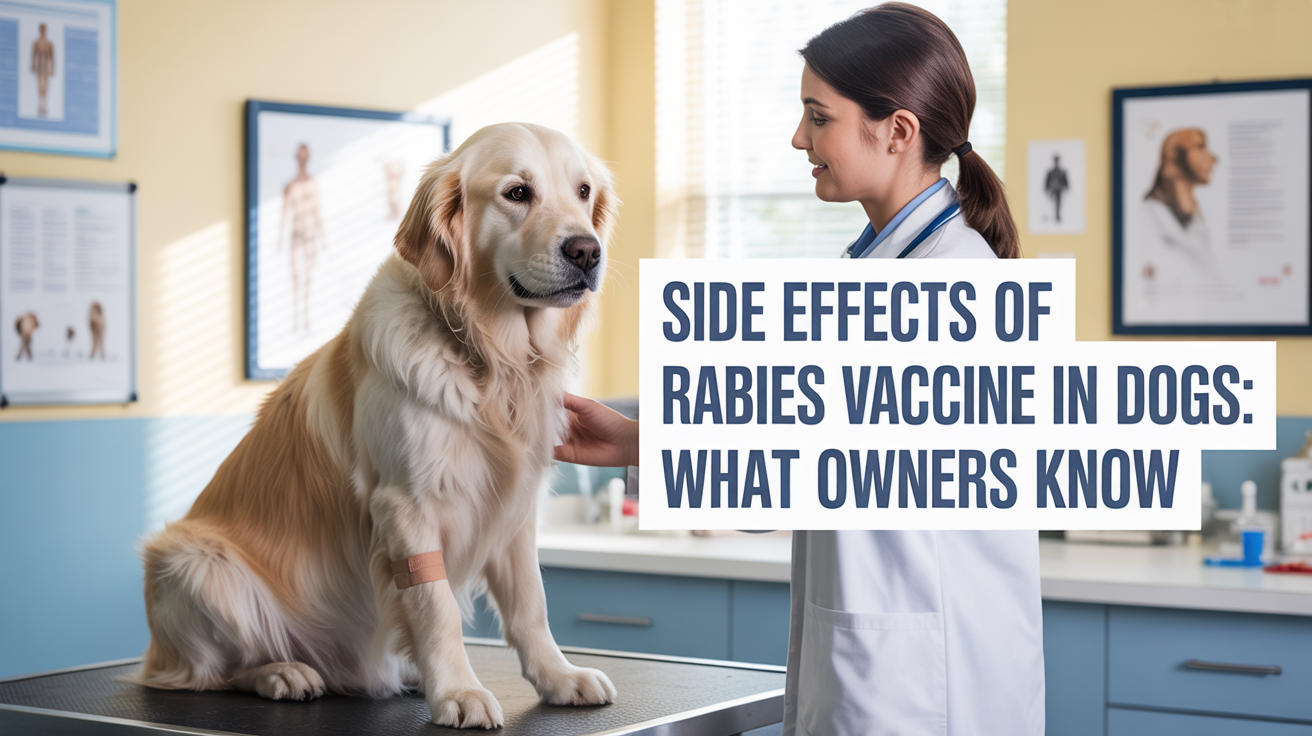
A small, painless bump at the injection site sometimes happens. It can last up to a couple of weeks. I know it looks odd, but it’s harmless and will go away on its own.
Rarely, you might see a small circular patch of hair loss where the needle went in. It’s not pretty, but the hair grows back. This happens because the vaccine temporarily affects that tiny area of skin. Your dog won’t even notice it’s there.
Rare But Serious Side Effects of Rabies Vaccine in Dogs

Serious reactions are rare. But I need you to recognize them because timing matters. If your dog has a severe reaction, they need emergency care fast.
This happens immediately or within 1-2 hours after vaccination. Watch for vomiting, diarrhea, hives (firm lumps on the skin), or facial swelling. You might see their muzzle or eyes puff up. Some dogs start coughing. Others develop severe swelling or pain at the injection site. In extreme cases, they might collapse or faint.
Don’t wait it out. Call your vet immediately or head to the nearest emergency clinic. These reactions need professional treatment right away. The good news? They’re treatable when caught early. Your vet can give medications to stop the reaction and keep your dog safe.
When to Contact a Veterinarian?
Knowing what’s normal versus what’s not can save your dog’s life. I want you to feel confident about when to wait and when to act.
Expected Normal Symptoms

Mild fatigue, fever, loss of appetite, and slight soreness at the injection site are all expected. Your dog might be a little grumpy or tired. That’s okay. Allow rest and monitor closely. Offer supportive care and hydration.
Most dogs bounce back within 24-48 hours. Keep their water bowl full and let them sleep it off. If they’re eating and drinking normally by day two, you’re in the clear.
Symptoms That Need Medical Attention

Some signs mean you need to call your vet. Don’t ignore side effects that last longer than 2-3 days. Watch for persistent, painful, or enlarging swelling at the injection site. Any signs of severe allergic reaction, behavioral changes, or worsening condition require medical attention.
Trust your gut. If something feels wrong, it probably is. Difficulty breathing or collapse means emergency care right now. No waiting. Get your dog to the nearest vet immediately. Your vet would rather you call and have it be nothing than wait too long.
Managing Side Effects & Treatment Options
Most side effects don’t need treatment. But knowing how to help your dog feel better makes the whole experience easier for both of you.
Supportive Care for Mild Symptoms

Your dog needs rest and reduced activity for 24-36 hours after vaccination. Think of it like a recovery day. Keep things calm and quiet at home.
- Monitor hydration and appetite.
- Keep water readily available.
- Offer their favorite food if they’re hesitant to eat
Most dogs feel better with just rest and TLC. If your dog seems uncomfortable, call your vet. They can prescribe something to ease the soreness. Don’t give human pain medication, it can be dangerous for dogs.
Options for Dogs with Vaccine Sensitivity

Some dogs react badly to vaccines every time. If your dog has had issues before, discuss the risk vs. benefit with your veterinarian. Rabies vaccination is legally required, but there are ways to make it safer.
- Pre-vaccine antihistamines to prevent reactions
- Post-vaccine monitoring plans (staying at the clinic for 30-60 minutes)
- Scheduling the appointment early in the day, when the staff is fully available
I’ve seen vets work with sensitive dogs successfully. The key is planning. Tell your vet about past reactions before the appointment. Together, you can create a plan that keeps your dog protected and safe.
Conclusion
You now know what to expect with the side effects of the rabies vaccine in dogs. Most reactions are mild and pass within a day or two. Soreness, tiredness, and a small bump at the shot site are completely normal. Your dog will bounce back soon.
Watch for serious signs like vomiting, facial swelling, or trouble breathing. These need immediate vet care, but they’re rare. Trust your gut. If something feels off, make that call. Your vet would rather hear from you than have you worry alone.
Keep this guide handy for your dog’s next vaccine appointment. Bookmark it, share it with other dog parents, or drop a comment below about your experience. Knowing what’s normal gives you peace of mind. Your dog is lucky to have someone who cares enough to learn and prepare. You’re doing great.
Frequently Asked Questions
What are the most common side effects of the rabies vaccine in dogs?
The most common side effects include mild soreness at the injection site, tiredness, and reduced appetite for 24-48 hours. Some dogs develop a small, firm lump where they got the shot. Low-grade fever and slight lethargy are also normal. These reactions show your dog’s immune system is responding properly.
How long do the side effects of the rabies vaccine in dogs typically last?
Most side effects disappear within 24 to 48 hours. A small lump at the injection site may last several weeks but should gradually shrink. If symptoms continue beyond three days or get worse, contact your vet. Persistent reactions need professional evaluation.
When should I worry about the side effects of the rabies vaccine in dogs?
Call your vet immediately if your dog shows facial swelling, hives, vomiting, diarrhea, difficulty breathing, or collapse. These indicate a serious allergic reaction. Also, contact them if mild symptoms last over three days, the injection site lump grows, or your dog seems painful.
Is a lump normal after my dog’s rabies vaccine?
Yes, a small, firm lump at the injection site is completely normal. It typically appears within hours and shrinks over several weeks. This happens because the vaccine contains an adjuvant that stimulates an immune response. Monitor the lump, if it grows, feels hot, or doesn’t shrink, see your vet.
Can my dog exercise normally after getting a rabies vaccine?
Give your dog 24-48 hours of rest after vaccination. Light walks are fine, but skip intense exercise, dog parks, or rough play. Your dog’s immune system is working hard, and rest helps prevent increased soreness. Resume normal activity once energy levels return to baseline.